
TLDR: AI-powered search tools are changing how people find information online. Generative engine optimization (GEO) helps businesses appear in AI-generated answers by optimizing content for authority, structure, and user intent.
At a Glance:
- AI search is transforming SEO. Search engines now generate top of the page answers using AI, making visibility in AI responses increasingly important.
- GEO focuses on AI citations, not just rankings. Businesses must optimize content to be referenced by AI systems.
- Strong SEO foundations still matter. Technical SEO, structured content, and authoritative insights remain critical for discovery.
- Expertise can help you stay ahead of AI search changes. As GEO continues to evolve, working with experienced digital marketing partners, like Proof Digital, can help businesses adapt their strategies and maintain visibility.
“Are you up to speed?” has become the defining question in digital marketing over the past few years.
AI has rapidly reshaped how people search for information online. From Google’s AI Overviews to conversational tools like ChatGPT and Perplexity, search is shifting from traditional results pages to AI-generated answers.
The latest strategy businesses need to understand? Generative engine optimization.
Generative Engine Optimization (GEO) is changing how search engines deliver information and how businesses must approach online visibility. If your brand isn’t optimized for AI-generated search responses, you may already be missing opportunities to appear where customers are looking.
Below, we break down what GEO is, how AI search works today, and how your business can stay visible in this new search landscape.
What is Generative Engine Optimization?
So, what is generative engine optimization?
Generative Engine Optimization is the practice of optimizing your website and digital content so it appears in AI-generated responses from search platforms such as ChatGPT, Perplexity, Gemini, Copilot, and Google’s AI Overviews.
In simple terms, GEO is SEO for AI-powered search.
Instead of simply ranking on a search results page, the goal is for your brand, insights, or website to be referenced or cited within AI-generated answers.
This means your content needs to be structured, authoritative, and helpful enough for AI systems to trust and use it when generating responses.
When operating within generative AI search engine optimization, consider that AI tools analyze and synthesize multiple sources to provide direct answers rather than just listing links.
For example:
When someone asks Google or an AI search tool:
“How long should I cook chicken breast on the grill?”
Instead of returning a list of websites to click through, the AI may generate a summarized answer at the top of the page and cite several sources used to build that response. Those sources are typically trusted websites with clear, helpful, and well-structured content.
That’s exactly where your brand needs to appear.

In Google’s AI Overviews, the answer appears directly in the results, allowing users to get quick information without scrolling through multiple pages. However, the AI still relies on external sources to generate that answer, and those sources are typically displayed alongside the response.
In other cases, users may skip traditional search engines entirely and go straight to AI chatbots like ChatGPT or Perplexity. When this happens, the AI may still reference companies, websites, and brands within its responses.
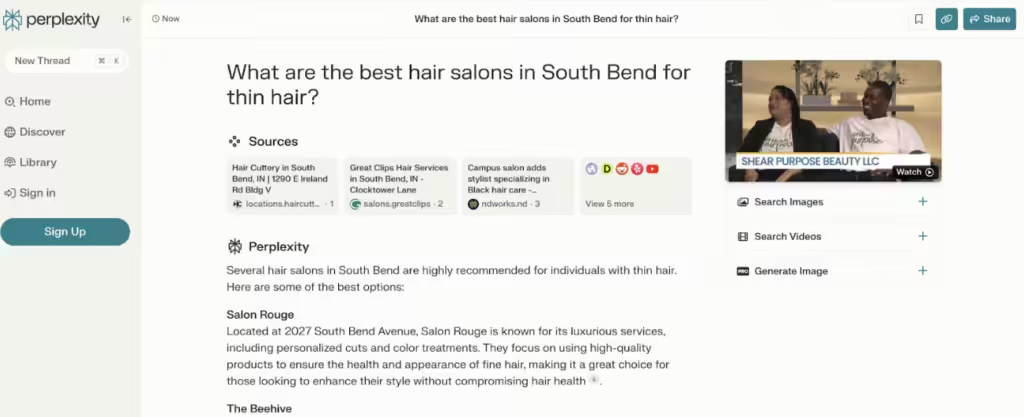

Again, that’s where you want your business to show up.
As AI continues to reshape how people search for information, businesses must now optimize not only for traditional search engines but also for the AI systems generating these answers.
How AI Search Is Changing Online Visibility
Traditional search relied heavily on keyword matching and algorithmic rankings. But AI search engines operate differently.
Instead of simply returning a list of links, generative engines:
- Understand context and intent
- Pull insights from multiple sources
- Summarize answers in real time
- Cite trusted content sources
This means visibility now depends on whether AI considers your content authoritative enough to reference.
For businesses, this shift introduces a new layer of search optimization.
Instead of optimizing only for Google rankings, companies must now optimize for AI visibility solutions with best generative engine optimization strategies.
Generative Engine Optimization vs Traditional SEO
Traditional SEO focuses on helping websites rank higher in search engine results pages (SERPs). GEO, on the other hand, focuses on ensuring your content is visible within AI-generated responses and recommendations.
While both strategies aim to increase visibility online, the way they achieve that goal is quite different.
Traditional SEO
Traditional search engine optimization is built around ranking factors used by search engines like Google and Bing. The goal is to appear at the top of search results so users click through to your website.
Key elements of traditional SEO include:
- Goal: Achieve top rankings in search results
- Optimization focus: Keywords, backlinks, and on-page content
- Content strategy: Keyword targeting, meta tags, and link building
- Algorithm adaptation: Optimizing for search engine ranking factors
- Measurement metrics: SERP rankings, website traffic, and conversions
- Search behavior: Relatively stable with periodic algorithm updates
This model has driven digital marketing strategies for more than two decades.
Generative Engine Optimization (GEO)
Generative engine optimization, however, focuses on helping your content appear within AI-generated answers produced by search engines and AI assistants.
Instead of competing solely for rankings, GEO prioritizes creating content that AI systems can easily interpret, trust, and reference when generating responses.
Key characteristics of GEO include:
- Goal: Appear in AI-generated answers and recommendations
- Optimization focus: User intent and AI-driven relevance
- Content strategy: Contextual, authoritative, and conversational content
- Algorithm adaptation: Optimizing for AI models and machine learning systems
- Measurement metrics: AI response visibility, brand mentions, engagement, and user interaction
- Search behavior: Increasing influence as AI-powered search continues to grow
SEO and GEO are not competing strategies; they are complementary.
Businesses that combine strong technical SEO with generative engine optimization strategies will be best positioned to maintain visibility as search continues to evolve toward AI-assisted experiences.
Generative Engine Optimization Best Practices
The good news is that many generative engine optimization best practices build on strong SEO fundamentals.
However, GEO requires a deeper focus on clarity, expertise, and content structure.
Here are some key strategies to start implementing today.
Focus on Search Intent
Understanding the why behind a user’s question is more important than ever.
Instead of targeting short, generic keywords, create content that answers specific questions and real-world problems.
For example, instead of targeting “running shoes,” create content around “best running shoes for flat feet” or “how to choose running shoes for beginners.”
This type of content aligns more closely with how people ask questions in AI tools.

Use Conversational Keywords
AI search queries tend to be longer and more conversational.
Optimizing for GEO means incorporating natural-language keywords and question-based content. Think about how someone might ask a chatbot instead of typing into Google.
Rather than simply using the keyword “best desk chair” in content, incorporate a more conversational key phrase like “the best desk chair for working from home.”
These phrases help AI understand context and improve your chances of appearing in responses.

Structure Content for AI Readability
AI models prefer content that is well organized, easy to scan, and clearly structured.
Use:
- Headers and subheaders
- TLDRs, lists and summaries
- FAQ sections
- Structured data (schema markup)
This makes it easier for AI systems to interpret and reference your content. Here’s everything you need to know about structuring blogs and long form content for AI discoverability.
Maintain Technical SEO Health
Even with AI-driven search, technical SEO still matters.
Key elements to have:
- Fast page speed
- Mobile optimization
- Secure websites (HTTPS)
- Clean site architecture
- Structured data markup
These factors help ensure your website can be crawled, understood, and trusted by search engines and AI systems.
Monitor and Measure GEO Performance
As AI search evolves, businesses need new ways to track success.
Understanding how to measure the success of generative engine optimization campaigns often involves monitoring:
- AI citations and brand mentions
- Traffic from AI-driven search platforms
- Brand visibility in AI responses
- Content engagement and authority signals
New AI-focused analytics platforms are also emerging to help businesses evaluate their GEO performance.
Ready to Improve Your AI Search Visibility?
The rise of AI-powered search has introduced a new challenge, and opportunity, for businesses.
Generative engine optimization is quickly becoming an essential part of modern digital marketing. As AI assistants increasingly shape how people discover information, brands must optimize not just for rankings, but for AI-generated answers.
By adopting generative engine optimization best practices, focusing on user intent, and maintaining strong technical SEO, businesses can position themselves to remain visible in the evolving search ecosystem.
Need an expert partner to guide you through it all? Proof Digital helps companies implement data-driven SEO and GEO strategies designed to increase visibility in both traditional search and AI-generated results.
If you’re ready to strengthen your online presence and future-proof your SEO strategy, our team is here to help.
Contact Proof Digital today to start optimizing your brand for the AI-powered search era.
FAQs
What is generative engine optimization?
Generative engine optimization is the process of optimizing website content so it appears in AI-generated search responses from tools like ChatGPT, Google AI Overviews, and Perplexity.
How is generative engine optimization different from traditional SEO?
The main difference in generative engine optimization vs traditional SEO is that GEO focuses on being cited within AI-generated answers, while traditional SEO focuses on ranking in search engine results pages.
Why is generative engine optimization important for businesses?
GEO is important because more users are relying on AI assistants for answers. Businesses must ensure their content appears in those responses to remain visible.
What are some generative engine optimization best practices?
Common generative engine optimization best practices include creating authoritative content, optimizing for search intent, structuring content clearly, and maintaining strong technical SEO foundations.
How can businesses measure GEO performance?
Measuring the success of generative engine optimization strategies involves tracking AI citations, brand mentions in AI responses, traffic from AI search platforms, and overall content authority.
Should companies hire a generative engine optimization agency?
Working with a generative engine optimization agency like Proof Digital can help businesses develop advanced GEO strategies, monitor AI search visibility, and adapt quickly as AI search technology evolves.
Related Links
- Trust Signals That Work: Lessons from 2025 for 2026 SEO
- How to Structure Blog Content for AI Search
- EEAT Is The Key to High-Quality Content that Ranks
- Why Your SEO Strategy Needs FAQs and How to Do It
- How to Be the Best Answer in AI Search
- Everything You Need To Know About Search GPT
- AI in Digital Marketing
- Our Work
- Let’s Talk